

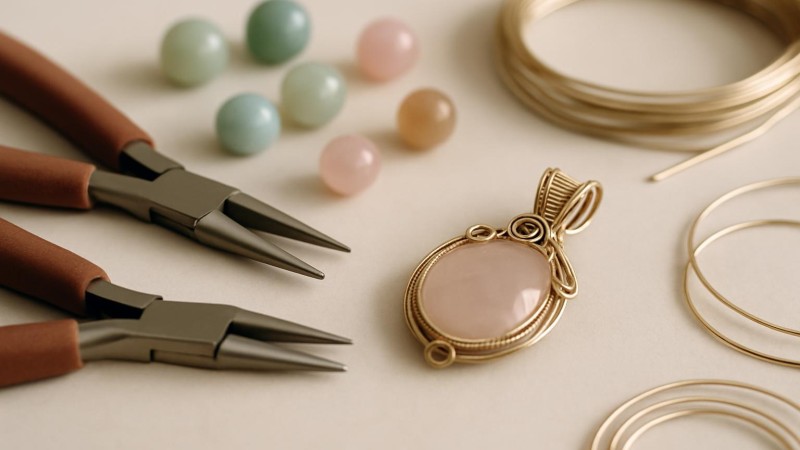
Introduction to Wire Wrapping
Wire wrapping is one of the oldest and most versatile jewelry-making techniques. It involves bending and twisting wire to secure stones, beads, and other components together—no soldering required. For beginners, learning the basics of wire wrapping opens up endless possibilities for creative expression. Whether you want to make a pendant, earrings, or a decorative charm, mastering a few essential techniques will give you the confidence to bring your designs to life.
At PebbleBead, we believe that wire wrapping is both an art and a skill. It allows artisans to transform natural materials like amethyst beads, copper wire, and gemstones into wearable art. In this guide, we’ll explore five fundamental wire-wrapping techniques, complete with examples and practical advice to help you start your journey.
Essential Tools and Materials
Before diving into the techniques, it’s important to gather the right tools and materials. Here’s what you’ll typically need:
- Round-nose pliers – for making loops and curves.
- Chain-nose pliers – for gripping and holding wires.
- Wire cutters – for cleanly trimming wire ends.
- Mandrel or cylindrical object – for shaping consistent loops or rings.
- Assorted wires – practice with copper or brass before moving on to silver or gold-filled wire.
- Beads and gemstones – choose smooth stones or drilled beads like freshwater pearls for easier handling.
Choosing the right wire gauge is also crucial. For most jewelry projects, 20- to 24-gauge wire works well for wrapping, while thicker wire (18-20 gauge) is ideal for frames.
Technique 1: The Basic Wire Loop
The basic loop is the foundation of wire wrapping. It’s used to connect components like beads, charms, and findings together. Once you master this, you’ll be able to create earrings, pendants, and chain links with ease.
How to Make a Basic Wire Loop
- Cut a piece of wire about 4–5 inches long.
- Grip the wire about an inch from one end using round-nose pliers.
- Twist the wire around the pliers to form a small loop.
- Thread your bead onto the wire.
- Make another loop on the other side to secure the bead in place.
Pro tip: Keep your loops consistent in size for a professional finish. Practice looping on scrap wire before moving on to more complex projects.
Technique 2: Wrapped Loop for Extra Strength
The wrapped loop builds upon the basic loop by adding extra coils of wire for durability and style. This technique is ideal for designs that need more stability, such as pendants or dangling earrings.
Step-by-Step Instructions
- Start by creating a small loop as before, but don’t close it completely.
- Hold the loop with chain-nose pliers and wrap the short tail around the base two or three times.
- Trim the excess wire and press down the end gently.
- Slide a bead onto the remaining wire and make another wrapped loop on the other side.
Wrapped loops not only strengthen your design but also add a handcrafted aesthetic. Use this method for heavier stones or multiple linked components.
Technique 3: Creating a Wire Wrapped Pendant
Wire wrapped pendants are a stunning way to showcase gemstones or crystals that lack drill holes. This technique uses wire to secure the stone in an elegant frame, turning a raw or tumbled piece into a wearable centerpiece.
Making a Simple Wire Wrapped Pendant
- Choose a focal stone—perhaps a polished agate slice or an uncut quartz point.
- Cut a length of wire about 18–24 inches long, depending on stone size.
- Wrap the wire around the stone’s perimeter, crossing the ends over at the top to create a bail (the loop for the chain).
- Twist the wires together securely and add decorative wraps around the stone’s surface.
In folklore, stones like quartz were often associated with clarity and energy focus, while ancient cultures regarded amethyst as a symbol of calm and wisdom. Incorporating such stones adds not only beauty but also a story to your piece.
If you’re new to this craft, start with a flat-backed stone or a smooth cabochon—these are easier to secure than irregular shapes. As you gain confidence, experiment with wrapping raw stones or combining them with accent beads like jump rings or spacer beads.
Technique 4: Coiling and Weaving for Texture
Once you’re comfortable with basic wraps, coiling and weaving can add intricate texture and depth to your jewelry. These methods involve wrapping thin wire around thicker base wires to create decorative patterns.
Simple Coiling
- Secure the end of a thin wire (26- or 28-gauge) to a thicker base wire (18- or 20-gauge).
- Wrap the thin wire tightly around the base, keeping coils close and even.
- Continue until you reach the desired length, then trim and secure the ends.
Coiling can be used to embellish frames, pendants, or wire rings. It’s a subtle way to elevate a simple design into something ornate and eye-catching.
Wire Weaving
Wire weaving takes coiling a step further by intertwining multiple base wires with a thinner wire. The result is a braid-like or lace-like texture that looks sophisticated and intricate. Common weaving patterns include the figure-eight and basket weave.
Weaving is often used to create cuffs or elaborate pendant frames. With practice, you can blend different wire colors—such as copper and silver—for a striking contrast.
Technique 5: Making a Wire Wrapped Ring
Creating rings is one of the most rewarding wire-wrapping projects for beginners. It’s quick, fun, and allows for endless customization.
Steps to Create a Simple Wire Wrapped Ring
- Cut about 10 inches of 20-gauge wire.
- Thread a small gemstone or bead onto the wire—perhaps a round amethyst beads for a classic look.
- Place the bead on top of a ring mandrel at your desired size.
- Wrap the wire ends around the mandrel on each side of the bead, crossing them underneath.
- Bring the ends back up and wrap them around the bead to secure it.
- Trim and tuck any sharp ends.
This technique gives you a custom ring in minutes. For extra flair, add coiled wire or small accent beads beside the focal stone. Rings featuring stones like rose quartz or turquoise are traditionally believed to bring love and balance, according to historical beliefs.
Common Mistakes and How to Avoid Them
Even experienced wire wrappers occasionally make mistakes. Here are a few common pitfalls and how to sidestep them:
- Uneven loops: Practice makes perfect. Use a marker on your pliers to create consistent loop sizes.
- Wire kinks or breaks: Always handle wire gently—avoid over-bending.
- Loose wraps: Keep tension steady for a polished finish.
- Scratched stones: Use nylon-jaw pliers or wrap plier tips with tape to protect delicate surfaces.
Patience and practice are key. As your skills grow, so will your ability to troubleshoot and refine your designs.
Creative Project Ideas
Once you’ve mastered the five core techniques, you can combine them to create unique jewelry pieces. Here are a few ideas to inspire your next project:
- Wire Wrapped Tree of Life Pendant: Use a circular frame and fine wire to form branches and roots. Add gemstone chips or freshwater pearls as leaves for a natural look.
- Beaded Hoop Earrings: Incorporate wrapped loops and coiling for texture.
- Layered Bracelets: Mix wire-wrapped beads and chain links for a boho-chic vibe.
- Statement Rings: Use weaving techniques around a large focal stone.
Don’t be afraid to experiment. The beauty of wire wrapping lies in its flexibility—each twist and loop adds a personal touch to your design.
Choosing the Right Stones and Metals
Your choice of materials can greatly influence the final look of your jewelry. For a warm, earthy style, use copper or brass wire with stones like jasper or carnelian. For a refined, classic appearance, silver wire paired with pearls or moonstone works beautifully.
Many artisans also enjoy incorporating stones that carry traditional symbolism. For instance, in folklore, amethyst was associated with serenity, while citrine was thought to attract abundance. Although these beliefs are not scientifically proven, they add a meaningful narrative to your creations.
Caring for Your Wire Wrapped Jewelry
To keep your wire-wrapped pieces looking their best, handle them with care. Avoid exposing them to water, perfumes, or harsh chemicals. Store your jewelry in a soft pouch or lined box to prevent tarnishing and scratches.
For copper or brass pieces, a gentle polishing cloth can restore shine. Silver can be cleaned with a mild jewelry cleaner or a soft cloth. Always dry your pieces thoroughly after cleaning.
Conclusion: Start Your Wire Wrapping Journey
Wire wrapping offers endless creative possibilities for jewelry makers of all levels. By mastering these five essential techniques—the basic loop, wrapped loop, pendant wrapping, coiling and weaving, and ring making—you’ll have a strong foundation to craft your own unique designs.
With the right tools, a bit of patience, and beautiful materials from PebbleBead, you can create pieces that are both artistic and personal. Each wire twist tells a story, and every finished piece is a reflection of your creativity. So gather your tools, pick up some wire, and let your imagination flow!

Leave a Comment